Beverly Hills residents could soon see new fees on large-scale developments, concentrated housing near the La Cienega Metro station, and a dedicated policing model at the city's two subway stops under a policy agenda Mayor Craig Corman is advancing through his one-year term.
The centerpiece is a development impact fee nexus study, listed as a FY 2026-27 City Council strategic priority, that would analyze whether future projects generate enough strain on roads, utilities, and parks to justify charging builders new fees. The revenue would help pay for infrastructure improvements needed to accommodate growth. The fees would apply to future projects, not developments already approved under the state's Builder's Remedy provision, according to the Beverly Press.
The study dovetails with a Transit-Oriented Development Alternative Plan the council unanimously adopted on January 21 as Resolution #26-R-13574. The plan, known as Scenario 3 or the "La Cienega Focused" scenario, redistributes housing density from single-family zones to parcels in the Mixed Use Overlay Zone within a quarter mile of the Wilshire/La Cienega Metro station. The council approved an amended version on June 9, and it took effect July 1 after review by the California Department of Housing and Community Development.
The goal is local control.
Senate Bill 79 allows developers to override local zoning near transit stops, and the TODAP is Beverly Hills' answer. At a June 10 Municipal League town hall, Corman told residents the city is fighting three state laws, including SB 79, SB 9, and AB 2011. "We're going to find whatever creative legal outcomes we have to protect our single-family areas and our multifamily areas," Corman said at the June 10 event.
Metro station security
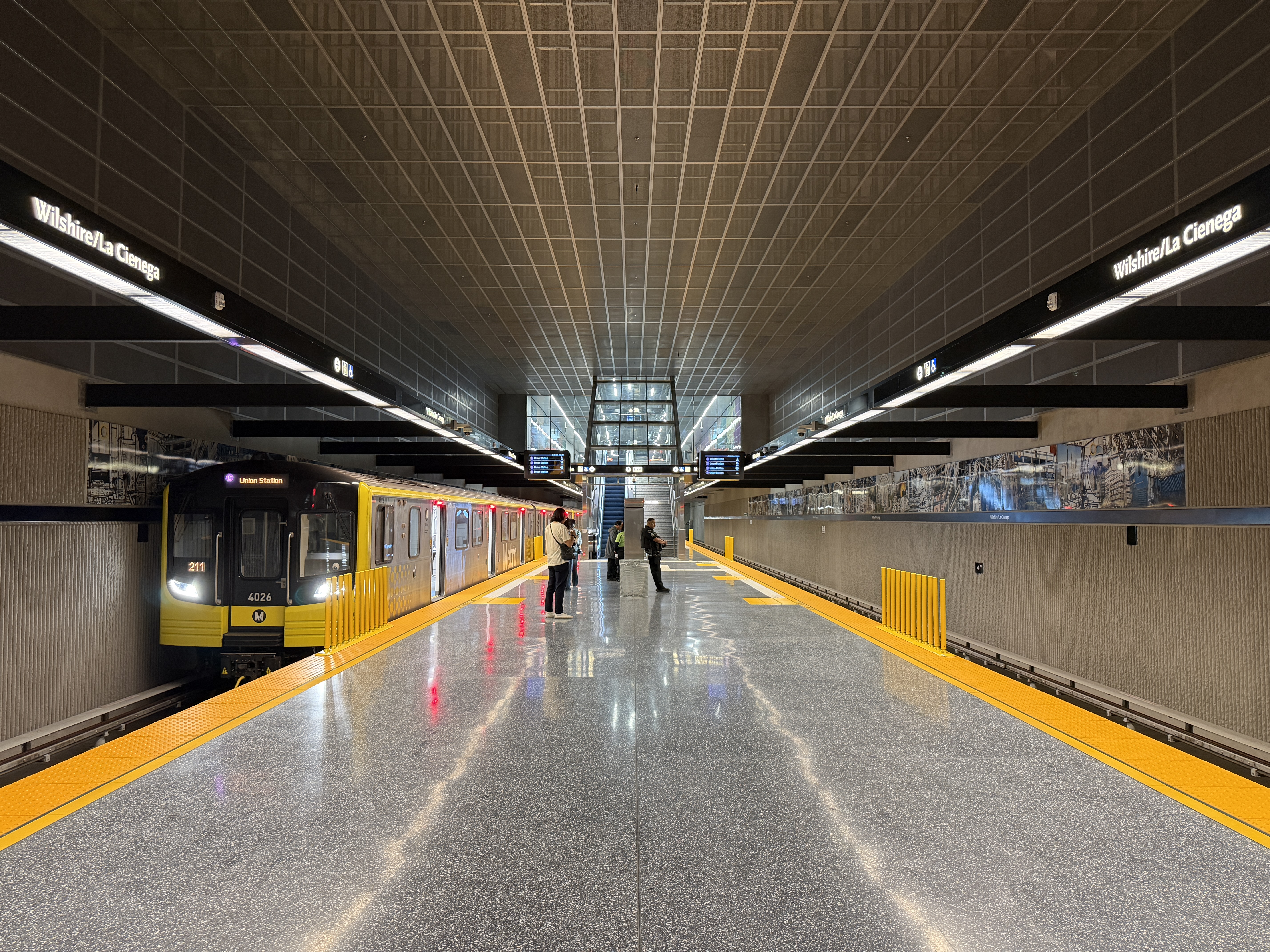
The Wilshire/La Cienega D Line station opened in May 2026. A second Beverly Hills station at Wilshire Boulevard and Reeves Drive is expected to open in 2027. Planning a policing model for the stations is another FY 2026-27 strategic priority, with city documents noting that funding may be needed depending on the model chosen.
Corman said the early results at La Cienega have been encouraging. Security guards are stationed at the plaza level at night, and the city has reported few safety incidents since the station opened. Residents in the surrounding area have reported little change, according to Corman's remarks at the town hall. He told the Beverly Press the city plans to apply the same security strategies from La Cienega when the Beverly Drive station opens.
Olympic planning and budget outlook
Beverly Hills will not host Olympic competitions in 2028, but a City Council ad-hoc committee of Councilmembers Lester Friedman and Sharona Nazarian is exploring ways to capitalize on the expected visitor influx. The committee held its first meeting Monday, June 29 and is discussing proposals including hosting a memorial event for the 1972 Munich Olympics massacre at the request of the Israeli Olympic Committee, allowing short- and long-term rentals of private homes as hospitality houses, and potential amendments to the city's banner policy to permit official LA28 signage. The 2028 Games are estimated to generate $13 billion to $17 billion in regional economic impact, according to city staff reports.
On the budget, Corman said at the June 10 town hall that Beverly Hills projects a $10 million collective deficit over the next two years but that a $19 million surplus from the prior fiscal year will cover it without dipping into reserves.
Corman, an attorney who served on the Planning Commission from March 2009 to June 2016 before winning a council seat in 2024, was sworn in as mayor on April 14. His next community event is the inaugural "Metro with the Mayor" ride on Sunday, August 16, departing the Wilshire/La Cienega station at 10:30 a.m. for a trip to Dodger Stadium.