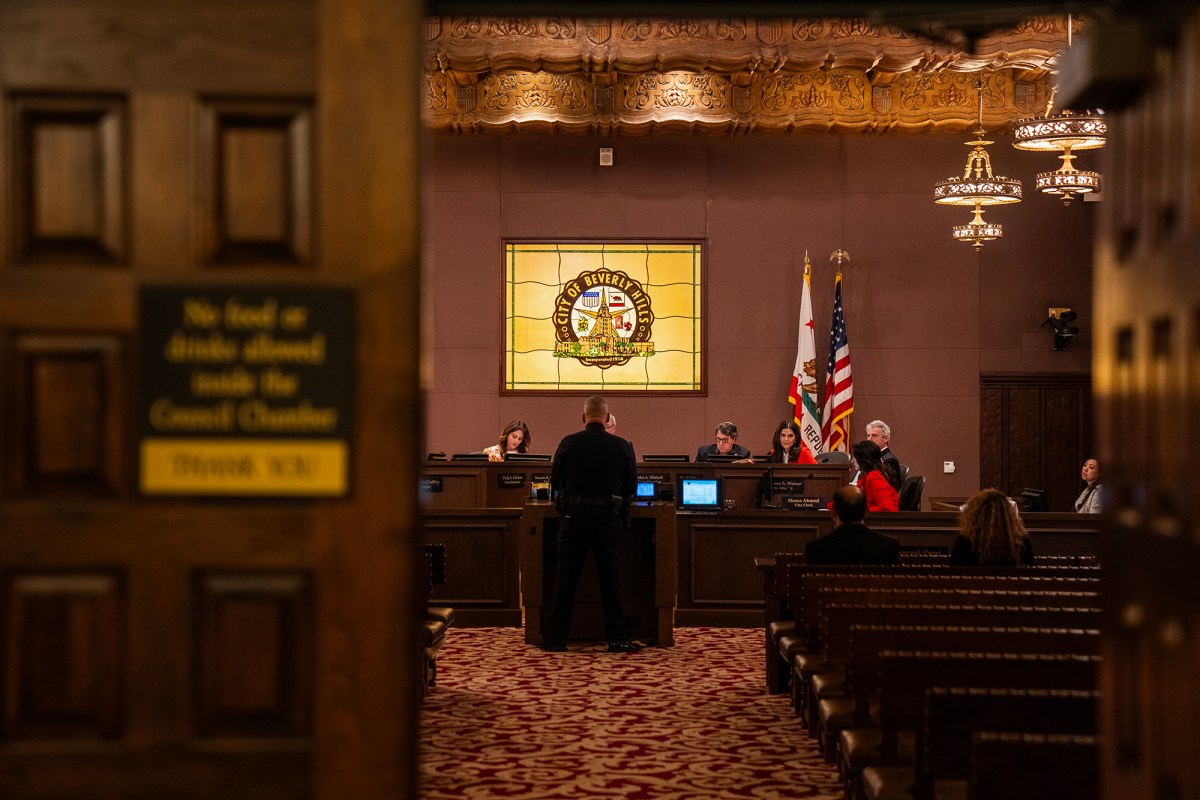
The Beverly Hills City Council unanimously approved a Transit-Oriented Development Alternative Plan on Tuesday, June 9, to delay the full upzoning requirements of SB 79, the state law that took effect July 1. That vote is one piece of a broader 2026 Legislative Platform that opposes at least four housing-density bills and backs wildfire-hardening funding as the city lobbies Sacramento and Washington.
The platform, last amended May 22 and posted at beverlyhills.org, guides city staff and contract lobbyists on how to respond when legislation moves fast in the Capitol. It covers more than 30 state and federal measures across the 2024, 2025, and 2026 sessions.
The document's dominant theme is local control. The platform pledges to "oppose state legislation that supersedes a jurisdiction's adopted zoning ordinances" and to fight any preemption of Beverly Hills' authority by state or federal action.
Housing: opposing density mandates
The city opposes four housing-related bills this session. AB 2118 (Hoover), the Affordable Housing and High Road Jobs Act, would set objective use-by-right standards. AB 2433 (Alvarez) would expand density bonus rules. AB 1738 (Carrillo) would let state inspectors conduct remote housing inspections. And SB 1361 (Durazo) would give transit agencies a larger role in housing development approvals.
SB 79 (Wiener), which allows buildings up to nine stories near certain transit stops, seven stories within a quarter-mile, and six stories within a half-mile, overrides local zoning citywide. Beverly Hills joined Pasadena, Glendale, and Los Angeles in passing its own density plan to delay implementation, according to Los Angeles Times reporting.
The platform does support AB 2576 (Harabedian), a separate transit-oriented development bill, and backs legislation protecting existing rent-stabilized housing.
Fire safety and insurance
With hillside areas bordering fire hazard zones, the city supports AB 1934 (Bennett), which would create a State Fire Marshal home-hardening certification program. It also backs AB 2517 (Calderon) on fire hazard severity zone designations and SB 877 (Pérez), which would require insurers to disclose how they calculate loss estimates for residential properties.
The platform broadly supports "wildfire-related legislation that provides funding opportunities to bolster community resilience" in Very High and High Fire Hazard Severity Zones.
Public safety and surveillance
Beverly Hills opposes SB 1013 (Cervantes), which would regulate Automated License Plate Recognition systems. The platform simultaneously supports the city's use of surveillance cameras and ALPR technology to prevent crime.
On criminal justice, the document calls for overturning Propositions 47 and 57 and reversing AB 109, the 2011 realignment law that shifted certain offenders from state prison to county supervision. The city supports AB 1588 (Stefani), the Sideshow Accountability and Community Safety Act, and SB 1190 (Grove), the Safe Passage for Youth Act.
Taxes and pensions
The city opposes AB 1768 (Bryan), which would authorize a new sales tax in Los Angeles County, and sent a veto request letter to the governor. It also opposes AB 1383 (McKinnor) on public employee retirement benefits, consistent with the platform's call to lobby for pension reform.
The Legislative Platform is amended annually by the City Council. Residents can comment on the city's positions at regular council meetings; the schedule is posted at beverlyhills.org.