Los Angeles's "mansion tax" survived its biggest legislative threat yet, and the tax's persistence could push high-value development toward neighboring cities, including Beverly Hills.
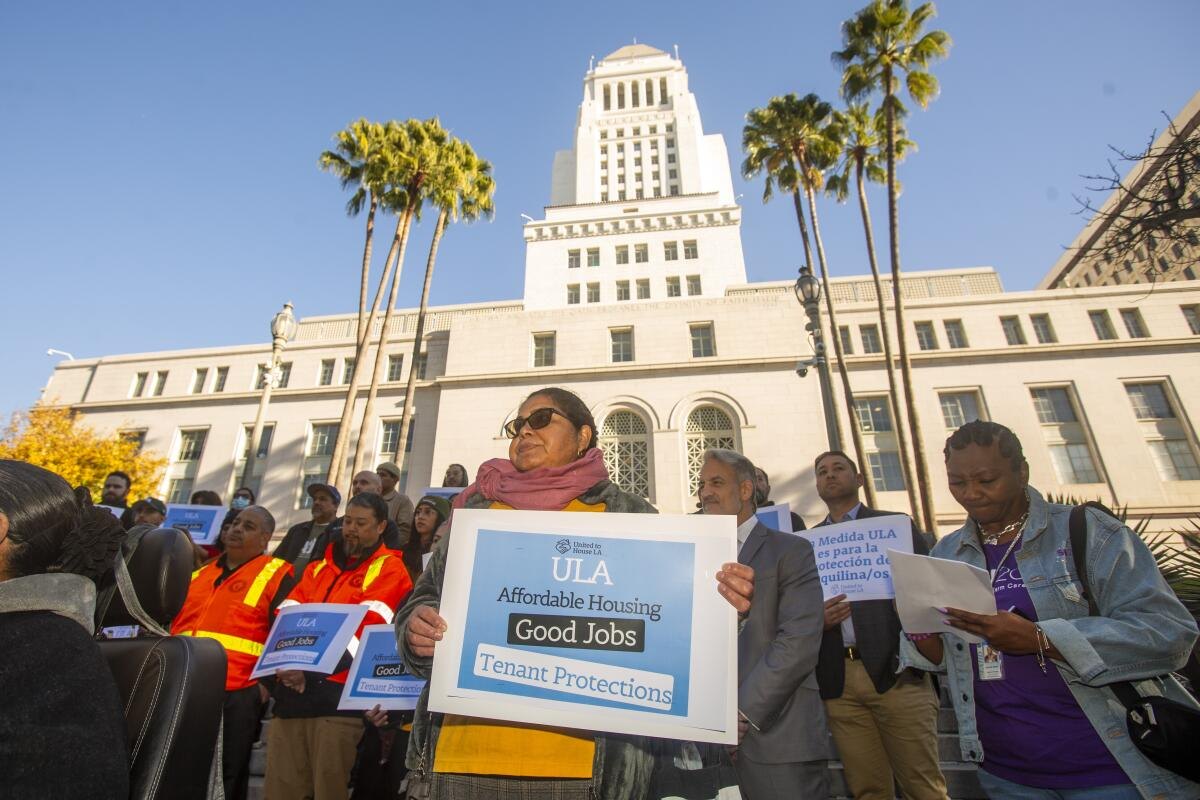
The L.A. City Council on Friday, June 26, approved a $544.3 million spending plan for Measure ULA, the transfer tax on property sales above $5.3 million. The plan is roughly 28% higher than last year's budget and directs $381 million toward affordable housing and $163.3 million toward homelessness prevention. It awaits Mayor Karen Bass's signature.
The vote came two days after a deal between state lawmakers and the Howard Jarvis Taxpayers Association killed a ballot measure that would have gutted ULA by capping transfer taxes at 0.11%. The tax, approved by L.A. voters in 2022, has raised more than $1.24 billion since taking effect in April 2023 but remains controversial among developers who say it discourages construction.
Sean Burton, CEO of Cityview, one of California's largest apartment developers, told the Los Angeles Times that Measure ULA "remains the major barrier to new housing development" in Los Angeles. He predicted that housing driven by SB 79, the state transit-zoning law that took effect Tuesday, July 1, would "skip Los Angeles city" and instead benefit neighboring cities without an equivalent tax.
Beverly Hills has no such transfer tax.
A UCLA Anderson School of Management working paper published in February found that new construction permit filings in Los Angeles fell an average of 40% between 2023 and 2024 compared to pre-tax levels. Multifamily permits dropped 27%. Researcher Yingru Pan wrote that developers "likely redirected capital and labor to jurisdictions unaffected by the policy."
Beverly Hills fits the pattern Burton described: a neighboring jurisdiction with transit access, new zoning capacity, and no mansion tax. The City Council unanimously adopted a Transit-Oriented Development Alternative Plan on Tuesday, June 9, channeling density required under SB 79 into a mixed-use corridor along Wilshire Boulevard near the La Cienega/Wilshire Metro D Line station. The plan allows buildings up to 132 feet and 201 dwelling units per acre on the highest-density sites.
Mayor Craig Corman acknowledged the city's opposition to SB 79 after the June 9 vote: "You play the hand you're dealt. In that regard, I think staff has done a very good job in fashioning this hand."
The TODAP was adopted as an urgency ordinance, valid for 45 days and subject to extension. The California Department of Housing and Community Development has up to 120 days to review the amended plan. Burton did not name Beverly Hills specifically, but the city checks every box he outlined for cities likely to benefit.
Back in Los Angeles, the council also voted 9-5 on Wednesday, June 17, to begin drafting a ballot measure that would exempt new apartment buildings sold within 10 years of construction from ULA. That proposal needs a second council vote to reach the November ballot.