More than 500 Ice Age fossils, including mammoth remains, ancient bison bones and giant ground sloth specimens, turned up beneath Wilshire Boulevard during the same Metro D Line construction that has disrupted Beverly Hills traffic for years. Now, as tunneling and station work push deeper into the city, residents may wonder what else lies below their streets.
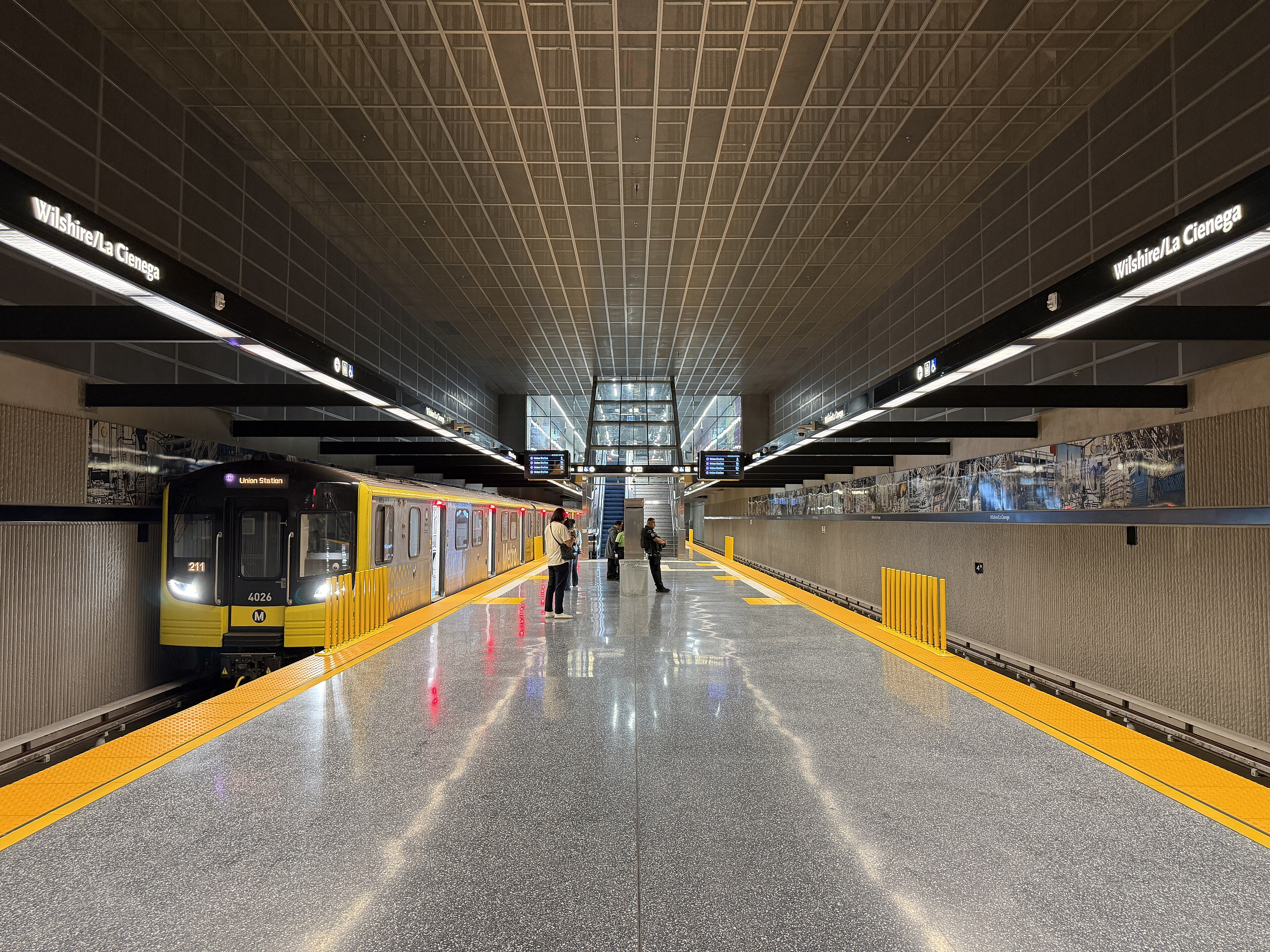
Metro released a video Friday, Aug. 14, highlighting more than 500 Ice Age fossils recovered during construction of Section 1 of the D Line extension, years before the three stations opened May 8. The agency had documented the 500-plus specimens by September 2020, KTLA reported Sunday, Aug. 16.
One find hit close to home. A paleontologist featured in Metro's video described seeing a sign reading "Found at the intersection of Wilshire and La Cienega," the Beverly Hills station that opened in May.
"This animal lived literally in your backyard," the paleontologist said.
Among the discoveries: a juvenile mammoth nicknamed "Hayden," pulled from sediment outside the asphalt deposits near the Fairfax station. Scientists had expected truckloads of tar-preserved bones given the dig's proximity to the La Brea Tar Pits. Instead, only a handful came out of the asphalt. Most of the collection is headed to the Natural History Museum of Los Angeles County, where some specimens are already on display in the "L.A. Underwater: The Prehistoric Sea Beneath Us" exhibition.
What it means for Beverly Hills
Construction on Section 2, which includes the Beverly Drive Station and the Wilshire/Rodeo Station, is scheduled for completion in spring 2027. K-rails line Wilshire Boulevard's curb lanes between El Camino Drive and Crescent Drive, and the city's construction update shows final street restoration between Stanley Drive and San Vicente Boulevard is expected to wrap up in the third quarter of 2026.
The disruption is not abstract. As of Aug. 14, Metro began Phase 1 of final paving on Wilshire between Hamilton Drive and San Vicente Boulevard, reducing the road to one lane in each direction between La Cienega Boulevard and San Vicente Boulevard through Aug. 17, according to a city of Beverly Hills traffic advisory.
Whether the same paleontological monitoring protocols that governed Section 1 apply to the Beverly Hills corridor remains unclear. The fossil-handling contract described in Metro's video covered Section 1 construction; no public documentation confirms identical terms for the Beverly Drive and Wilshire/Rodeo station digs. Metro was not reached for comment on this question.
The full D Line extension spans nine miles and carries a price tag between $9.5 billion and $10 billion, depending on the source. Metro projects 53,000 new daily riders when all stations open. Beverly Hills Mayor Craig Corman, who rode the D Line on opening day, called the project "an exciting new era" at the May 8 opening ceremony.
At least one lawsuit tied to construction damage is active: Flats Management Group, LLC v. LACMTA appeared on the Beverly Hills City Council's closed-session agenda July 21, alleging property damage from the tunneling work. Metro's Business Interruption Fund had awarded $5,482,133 to affected Beverly Hills and Century City businesses as of September 2024.
Residents with construction questions can contact Metro's 24/7 hotline at 213-922-6934 or visit beverlyhills.org/purpleline.